


Zygomatic Implants
Bone deficiency is no longer a barrier. Achieve permanent solutions with zygomatic implants.

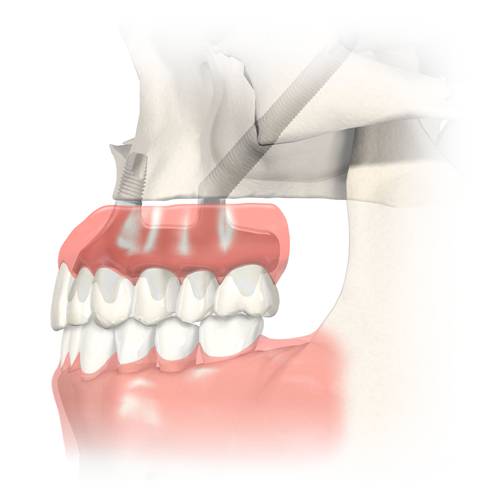
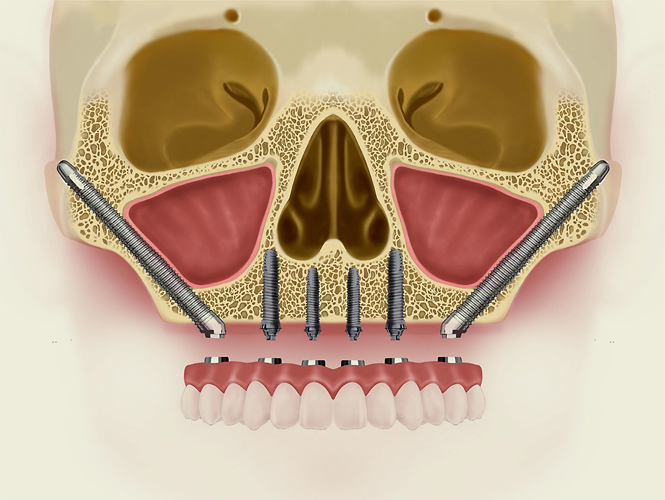
In patients with insufficient jawbone, zygomatic implants are placed into the cheekbone. This method enables prosthetic and implant treatments, providing advanced technological solutions for a strong, long-lasting, and aesthetic smile.

What is a Zygomatic Implant?
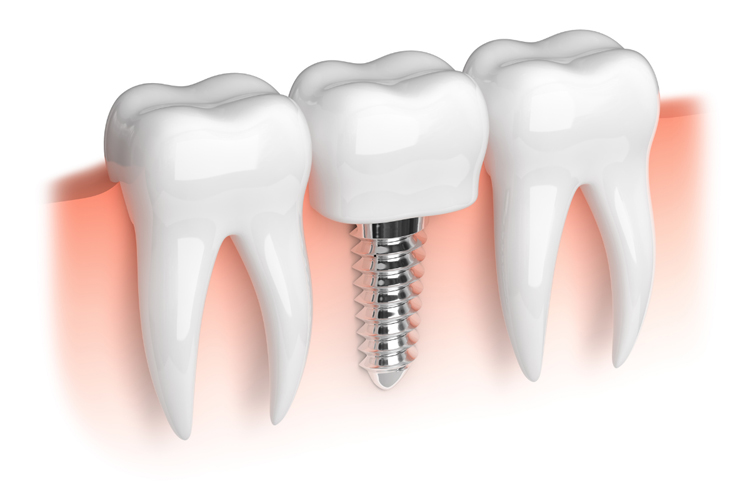
A zygomatic implant is a specialized type of implant that is longer than conventional implants and is placed into the cheekbone instead of the upper jawbone. This method allows implant treatment without the need for a bone graft when there is jawbone resorption or deficiency.
When is a Zygomatic Implant Preferred?
- Patients with severe bone loss in the upper jaw
- Individuals previously considered unsuitable for implants
- Those who prefer to avoid bone graft or sinus lift procedures
- Patients who have lost all their teeth and desire fixed prosthetics
- Individuals who have used dentures for a long time and have developed bone loss
Advantages of Zygomatic Implants
Eliminates the need for bone grafting → No additional surgery required.
Faster treatment process → Achieves results more quickly compared to traditional implants.
Durable and reliable → Provides strong support due to the dense structure of the cheekbone.
Enables fixed prosthetics → Especially suitable for patients with complete tooth loss.
Improves quality of life → Chewing, speaking, and aesthetic functions are quickly restored.
How is Zygomatic Implant Treatment Performed?
- Examination and imaging: The bone structure is thoroughly assessed using 3D tomography.
- Planning: The placement sites for the zygomatic implants are determined.
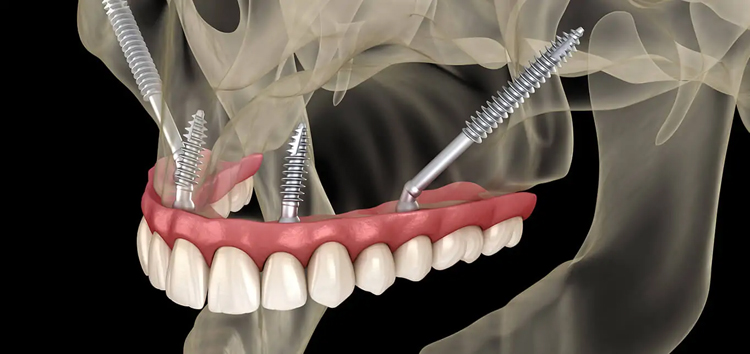
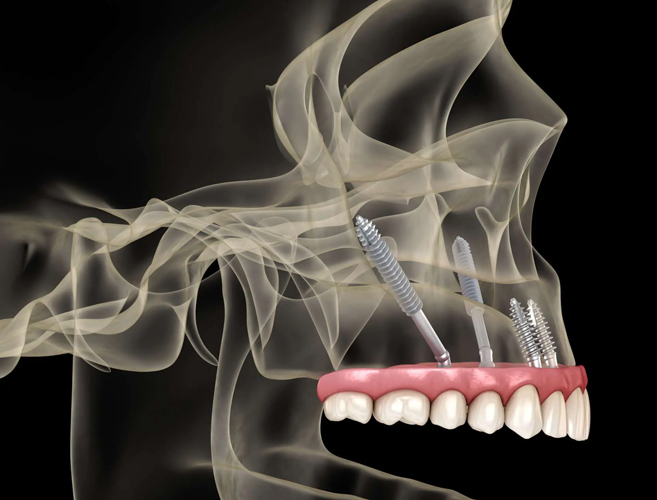
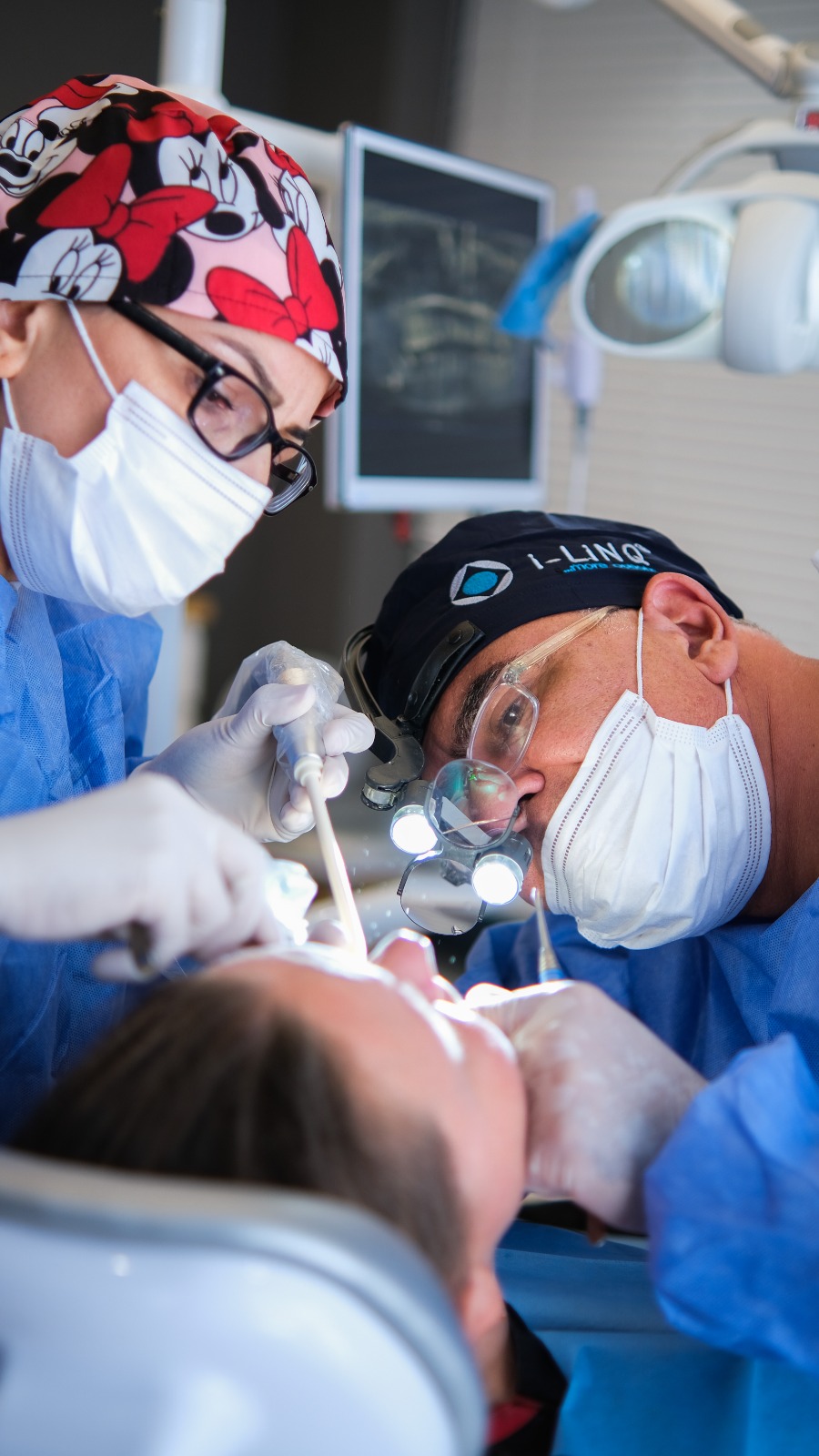
- Surgical procedure: Implants are fixed into the cheekbone under general or local anesthesia.
- Prosthetic phase: Temporary or permanent prosthetics can be applied shortly after implant placement.
- Follow-up and care: Regular check-ups are conducted to monitor the integration of the implants.
Post-Zygomatic Implant Care Instructions
- Swelling and mild pain may occur in the first few days; this is normal.
- Soft foods should be preferred.
- Medications prescribed by the doctor should be taken as directed.
- Smoking and alcohol consumption can delay healing.
- Maintain regular oral hygiene and do not skip follow-up appointments.
Lifespan of Zygomatic Implants
With proper care and regular check-ups, zygomatic implants can last 20 years or more. In many patients, they can function flawlessly for a lifetime.